
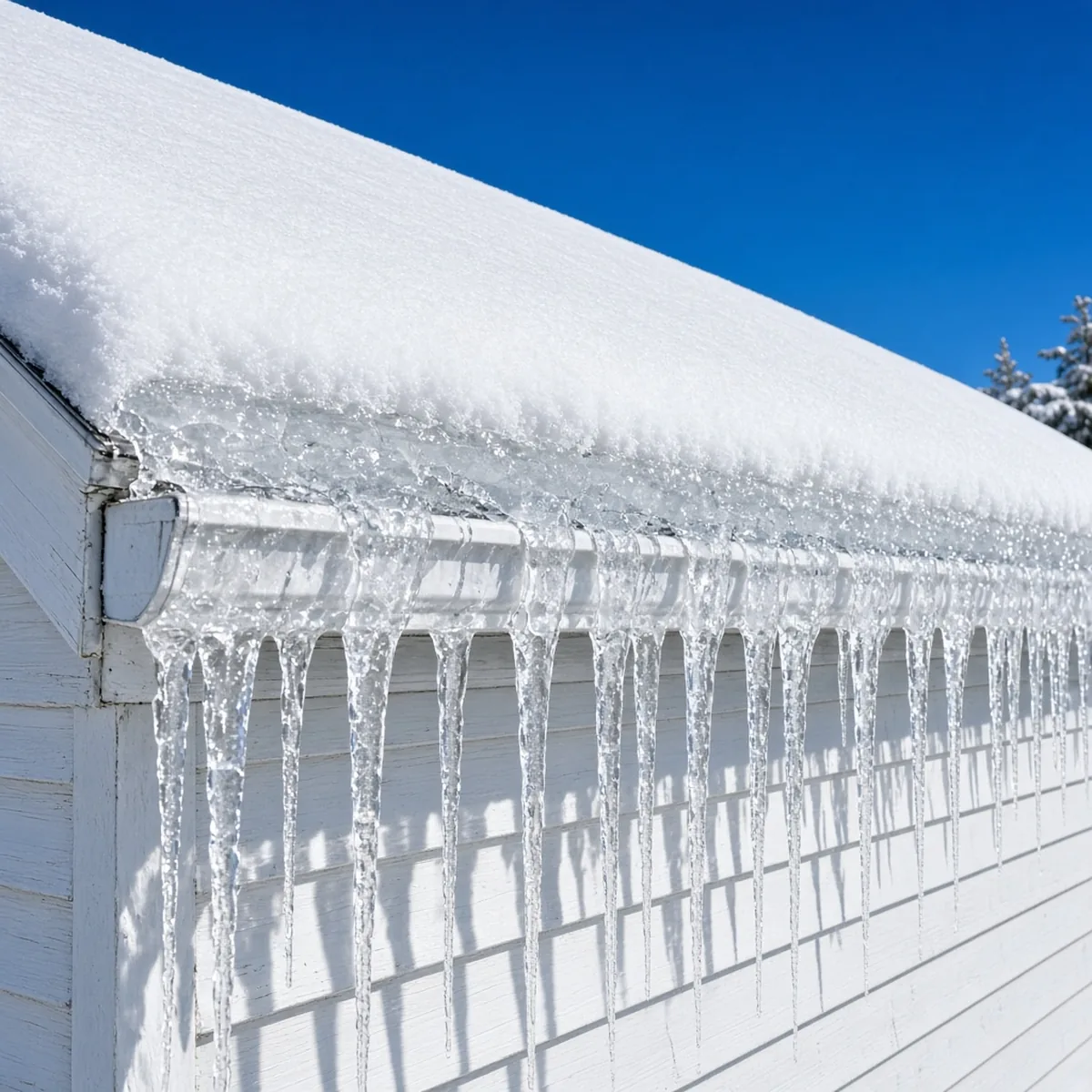
An ice dam forms when snow on a warm upper roof melts, runs down to the cold eave, and refreezes into a ridge of ice that traps the next round of melt behind it. Amherst gives this the conditions it needs: about 36.5 inches of snow a year and a February that averages a daytime high near 37°F and a nighttime low near 15°F at the town's weather station under NOAA's 1991–2020 normals. That daily swing across freezing is what drives the cycle.
The Short Answer
Gutters do not cause ice dams and cannot stop them, because the dam forms from heat escaping the roof, not from the gutter. What a clear, properly pitched gutter does is carry away the water once it reaches the edge, instead of letting it pool behind packed debris and freeze. The ice dam itself is fixed with attic insulation and roof ventilation. Keeping gutters clear helps water leave the roofline.
How an Ice Dam Forms
First, heat escaping through the roof warms the upper surface and melts the underside of the snow. Second, the meltwater runs down toward the eave, which stays cold because no living space sits under it. Third, the water refreezes at the cold edge and builds a ridge of ice. Finally, more melt backs up behind that ridge and can work under the shingles into the house. The gutter sits at the coldest point, the eave.
What Gutters Have to Do With It
Gutters sit at the eave where the ice forms, so they get blamed for ice dams they do not cause. A gutter packed with frozen leaves cannot carry away any melt that does reach it, which adds to the water pooling at the edge. A clear gutter with open downspouts lets that water drain. The gutter does not create the dam, but a blocked one makes the backup at the eave worse.
Fixing the Real Cause
The real cause of an ice dam is heat reaching the roof deck, so the fix is in the attic, not the gutter. Adding insulation keeps house heat from warming the roof, and improving ventilation keeps the roof deck cold and even in temperature. With the roof kept cold, the snow does not melt and refreeze at the eave. Gutters and downspouts handle the water that drains once temperatures rise.
What Gutters Can Do in Winter
| Gutters can | Gutters cannot |
|---|---|
| Carry away melt that reaches the edge | Stop snow from melting on a warm roof |
| Drain faster when clear and pitched | Prevent ice from forming at a cold eave |
| Reduce pooling at the eave | Replace attic insulation or ventilation |
A clear, well-pitched gutter is part of managing winter water, not a cure for ice dams. Call 123-456-7890 to reach a gutter installer in Amherst.